©Copyright 2019 Suzhou Huiyuan Plastic Products Co., Ltd All rights reserved. Terms and Conditions Designed by iwonder.cnSite Map

corrugated plastic sheet manufacturers
Collapsible corrugated plastic boxes have become one of the most efficient and cost-effective packaging solutions for modern logistics, warehousing, agriculture, manufacturing, and e-commerce. As companies look for lightweight, durable, reusable, and space-saving alternatives to traditional cardboard or wooden boxes, collapsible corrugated plastic boxes stand out as a smart and sustainable option. Whether you refer to them as plastic corrugated foldable boxes, folding corrugated plastic boxes, or simply corrugated plastic bins, the concept remains the same—these containers combine strength, flexibility, foldability, and long-term usability to improve handling efficiency.
In this article, we will explore what collapsible corrugated plastic boxes are, their structure, key advantages, applications across industries, customization possibilities, and how they compare to traditional packaging materials. By the end, you will understand why more businesses are switching to foldable corrugated plastic boxes for long-term savings and operational improvement.
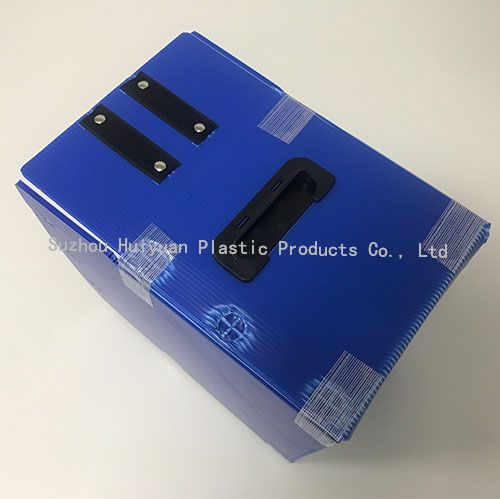
Collapsible corrugated plastic boxes are reusable packaging containers made from polypropylene (PP) corrugated sheets. Unlike disposable cardboard boxes, these containers feature a rigid yet lightweight structure with hollow fluted panels. This construction provides high strength, impact resistance, and excellent waterproof performance.
The term collapsible or foldable refers to the design that allows users to fold the box flat when not in use. This simple but highly effective feature makes them ideal for circulation systems, return logistics, and closed-loop supply chains.
Hollow PP corrugated sheet walls
These fluted polypropylene panels offer durability while remaining lightweight.
Reinforced edges and corners
Many models are equipped with plastic or steel-reinforced corners for added load capacity.
Interlocking structure or folding mechanism
Sidewalls can collapse inward or fold over to create a flat, compact form.
Optional lids, dividers, and handles
These accessories upgrade usability depending on the industry and application.
Dustproof, waterproof, and chemical-resistant materials
PP corrugated plastic naturally repels water and resists oils, acids, and most chemicals.
With such a design, collapsible corrugated plastic boxes deliver long service life and reusable performance, making them perfect for environments where frequent handling and repeated transport are required.
To understand why collapsible corrugated plastic boxes are increasingly replacing traditional packaging materials, it helps to compare the differences.
Corrugated cardboard boxes usually last one or two uses.
Plastic corrugated foldable boxes can last hundreds of cycles without deformation.
For companies involved in circulation logistics or repeated point-to-point transport, reusable packaging significantly lowers long-term costs.
Cardboard absorbs moisture and becomes weak when exposed to humidity. Corrugated plastic does not. Folding corrugated plastic boxes remain strong in rain, cold rooms, freezers, and dusty warehouses.
Plastic surfaces are easy to wash and disinfect, meeting high hygiene requirements in industries like food, agriculture, and medical transport.
Although plastic is often misunderstood, collapsible PP boxes reduce waste because they are:
Reusable for years
Fully recyclable after end-of-life
Compatible with closed-loop recycling systems
This makes them an eco-friendly choice for companies looking to reduce disposable packaging waste.
One of the biggest advantages is the foldable feature. When boxes are empty, they can be collapsed to reduce storage and transportation volume by up to 70%.
This saves:
Warehouse space
Return shipping costs
Labor handling costs
For businesses with circular logistics, this benefit alone can justify switching to collapsible corrugated plastic boxes.
Despite being lightweight, PP corrugated material offers a high strength-to-weight ratio. These boxes can handle:
High stacking loads
Repeated impacts
Rough handling
Many models are enhanced with steel reinforcements or thickened walls, increasing load-bearing capacity.
Manufacturers can customize folding corrugated plastic boxes in:
Size
Color
Thickness
Structure (with or without lids, dividers, inner foam, etc.)
Printing (logos, serial numbers, QR codes)
This makes them suitable for brand-specific logistics and inventory tracking systems.
In environments where cardboard fails—wet floors, cold environments, chemical storage—corrugated plastic performs consistently.
Plastic corrugated foldable boxes have smooth surfaces without nails, splinters, or metal edges, reducing the risk of workplace injuries.
These boxes are designed for repeated reuse—many last for 2 to 5 years or longer depending on usage conditions.
Because of their versatility, collapsible corrugated plastic boxes are widely used in many industrial and commercial fields.
In logistics centers and warehouses, collapsible corrugated plastic boxes:
Improve stacking efficiency
Reduce empty transport costs
Protect goods during long-distance shipping
Their durability makes them ideal for rotation between storage and distribution centers.
Factories use foldable corrugated plastic boxes to transport components, tools, or semi-finished products. The boxes can be customized with:
Partitions
ESD anti-static material
Foam inserts
Barcode labels
These features help maintain order and traceability throughout the production process.
Agricultural producers use collapsible corrugated plastic boxes for:
Packaging fruits and vegetables
Transporting seedlings
Sorting harvested crops
Since the boxes resist moisture and dirt, they are easier to clean and reuse.
Foldable corrugated plastic boxes comply with food-safe requirements thanks to PP material. They are common in:
Cold chain logistics
Fresh produce distribution
Meat processing and delivery
Their waterproof properties prevent contamination.
Cleanliness and hygiene are essential in medical logistics. Corrugated plastic boxes can be disinfected easily, ensuring safe transport of:
Medical instruments
Drugs and supplies
Laboratory samples
Anti-static or conductive versions are available for sensitive electronic medical devices.
E-commerce companies are shifting from single-use cardboard packaging to reusable corrugated plastic boxes for internal transport between warehouses and delivery hubs.
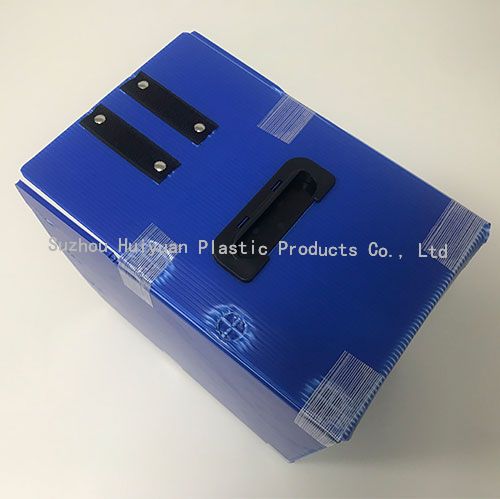
Collapsible corrugated plastic boxes are a modern packaging innovation that combines strength, foldability, and long-term value. Made from durable PP corrugated board, they provide superior protection, excellent hygiene, and significant space-saving advantages. Whether referred to as collapsible corrugated plastic boxes, plastic corrugated foldable boxes, or folding corrugated plastic boxes, these reusable containers are widely used across logistics, manufacturing, agriculture, food processing, medical supply distribution, and many other industries.
Their ability to fold flat when not in use reduces both storage costs and return transport costs, making them essential in modern supply chains. With robust structure, chemical resistance, custom options, and long service life, they offer a smarter and more sustainable alternative to traditional cardboard or wooden boxes.

By continuing to use the site you agree to our privacy policy Terms and Conditions.
